Power
This guide expands on the previous design described in Survival to help establish a scalable solar power network that will allow for growth and long-term sustainability.
DEPRECATED GUIDE
This power guide is outdated and no longer recommended. It was written for the previous terrain system and contains suboptimal build strategies that have since been refined.
Updated Guide Available: Solar Power Infrastructure
The new guide incorporates lessons learned from multiple builds, addresses the recent major game updates, and provides more reliable construction methods for current gameplay.
This page is preserved for reference only.
Pre-Requisites
A Stationeer reading this guide should…
Have established a simple base (See Survival).
Be able to smelt alloys using the furnace.
Know how to install logic kits.
Objectives
Create a scalable solar power generation system.
Improve nighttime visibility and navigation of the base
Constraints
Cables are rated up to 5kW
Heavy Cables are rated up to 100 kW
Power infrastructure including solar panels, fuel generators and station batteries must be mounted atop frames.
Earth eclipses the sun for about 30s before setting 40s later
Solar panel efficiency is around 93%
Materials
9 frames - 6 sheets (iron or steel)
5 iron walls
3 ladders
Cable coil (approx. 100)
Heavy Cable Coil (approx. 100)
2 Transformers
2 Area Power Controllers
1 small battery
1 large battery
1 Station Battery - 2 steel sheet
1 Solid Fuel Generator
5 Solar Panel - 5 glass sheets
1 Solar Panel Basic - 1 glass sheet
2 Logic I/O
1 Sensor
3 lights
Optional: 1 portable light
Network Topology
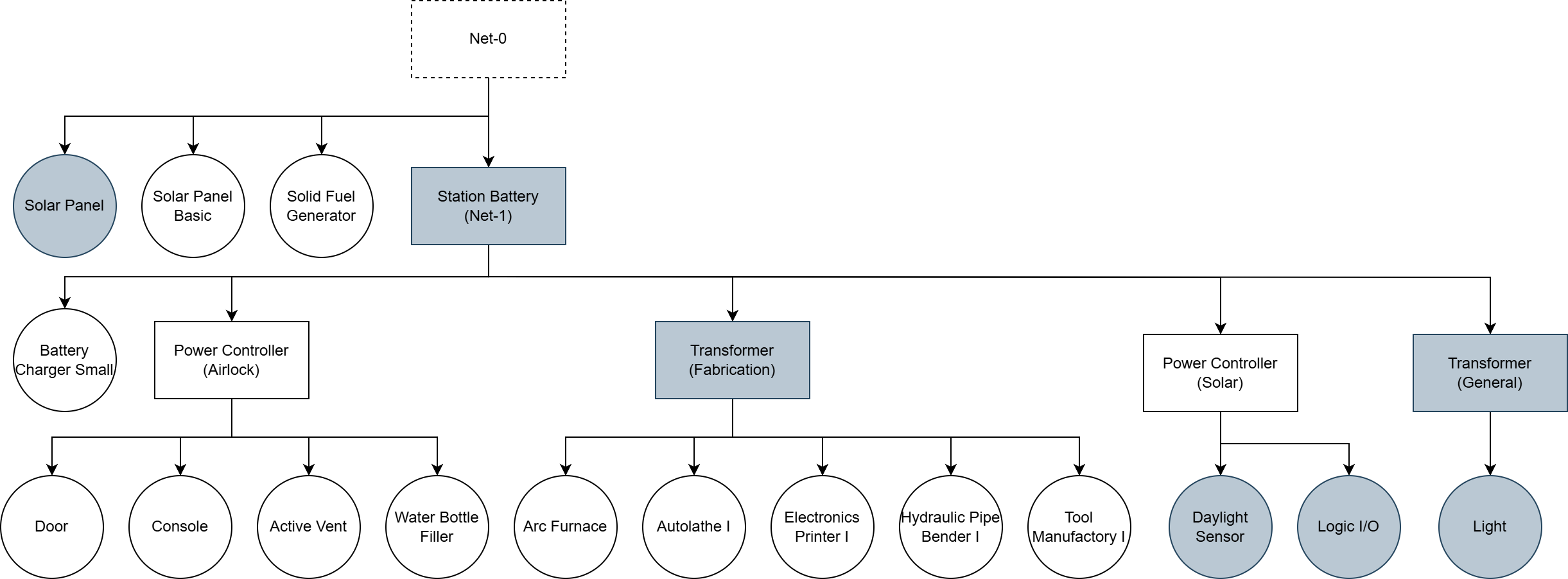
In Survival, there are 3 distinct power networks:
Root (
Net-0),Airlock, for operating airlock devices
Fabrication, for materials and component production
To meet energy requirements, three new power networks will be added:
Net-1[Station Battery]: provides additional energy storage capacity with the station battery that child networks will source.
Solar[APC]: maintains the vertical angle of solar panels in order to maximize power generation efficiency.
General[Transformer]: a general purpose network for additional station amenities that have yet to be categorized.
Replace the Fabrication APC with a transformer.
Estimated Power Demand
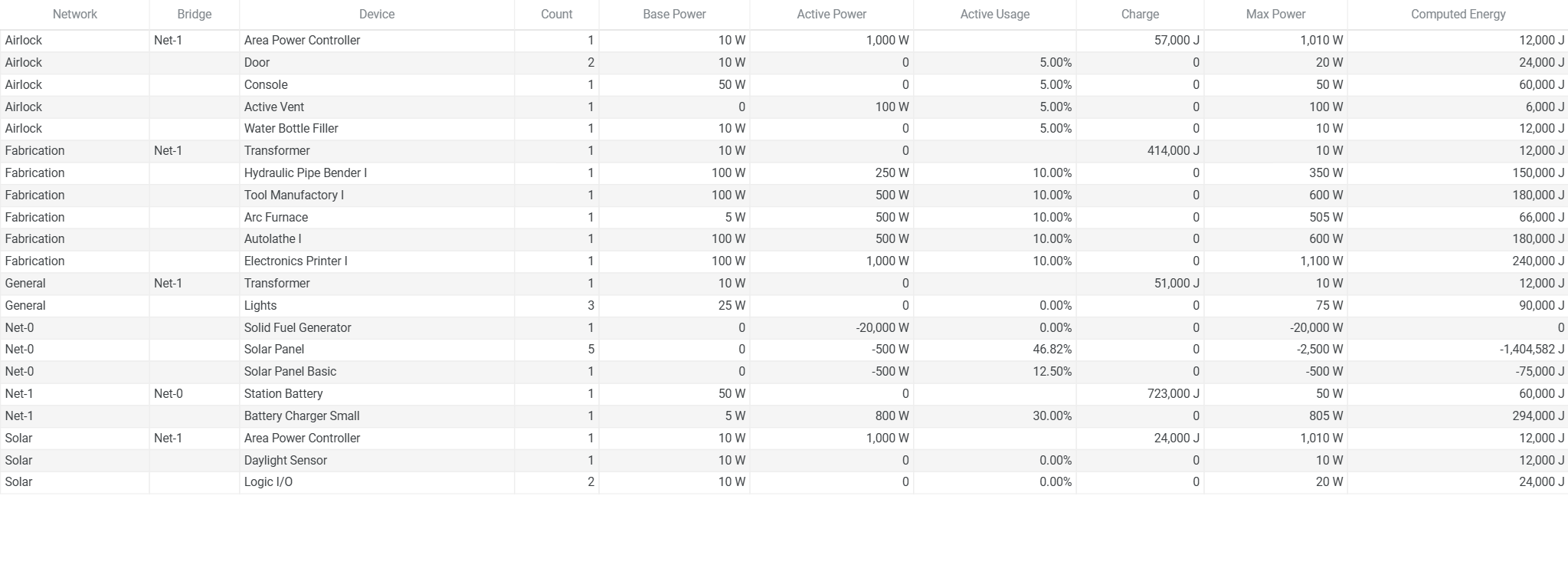
Given the list of devices and their estimated usage,
A station battery will be required to store energy during periods when the solar panels are not generating power.
Both
Net-0andNet-1will require heavy cable.Five tracking solar panels are required to support energy needs.
Power Platform
A multi-level platform will be used for placing power infrastructure. The lower level will house station batteries and a backup fuel generator, and the next level will house the solar panels. The objective here is to ensure that the solar panels have an unobstructed view of the sun to maximize energy collection.
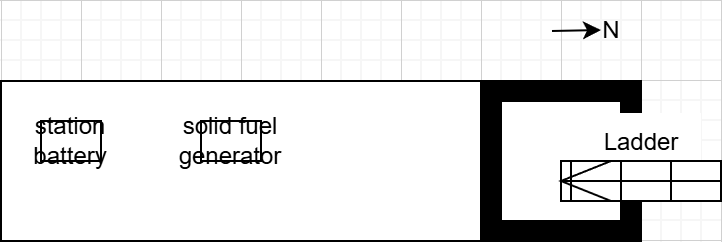
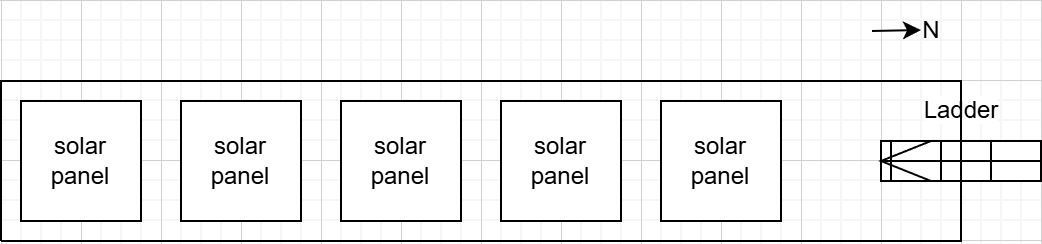
As power needs scale, either continue to grow the existing platform or build additional rows. A common rule of thumb is to place rows at least 6m (3 large grid spaces) apart to minimize lost efficiency due to light occlusion.
Procedure
Resourcing
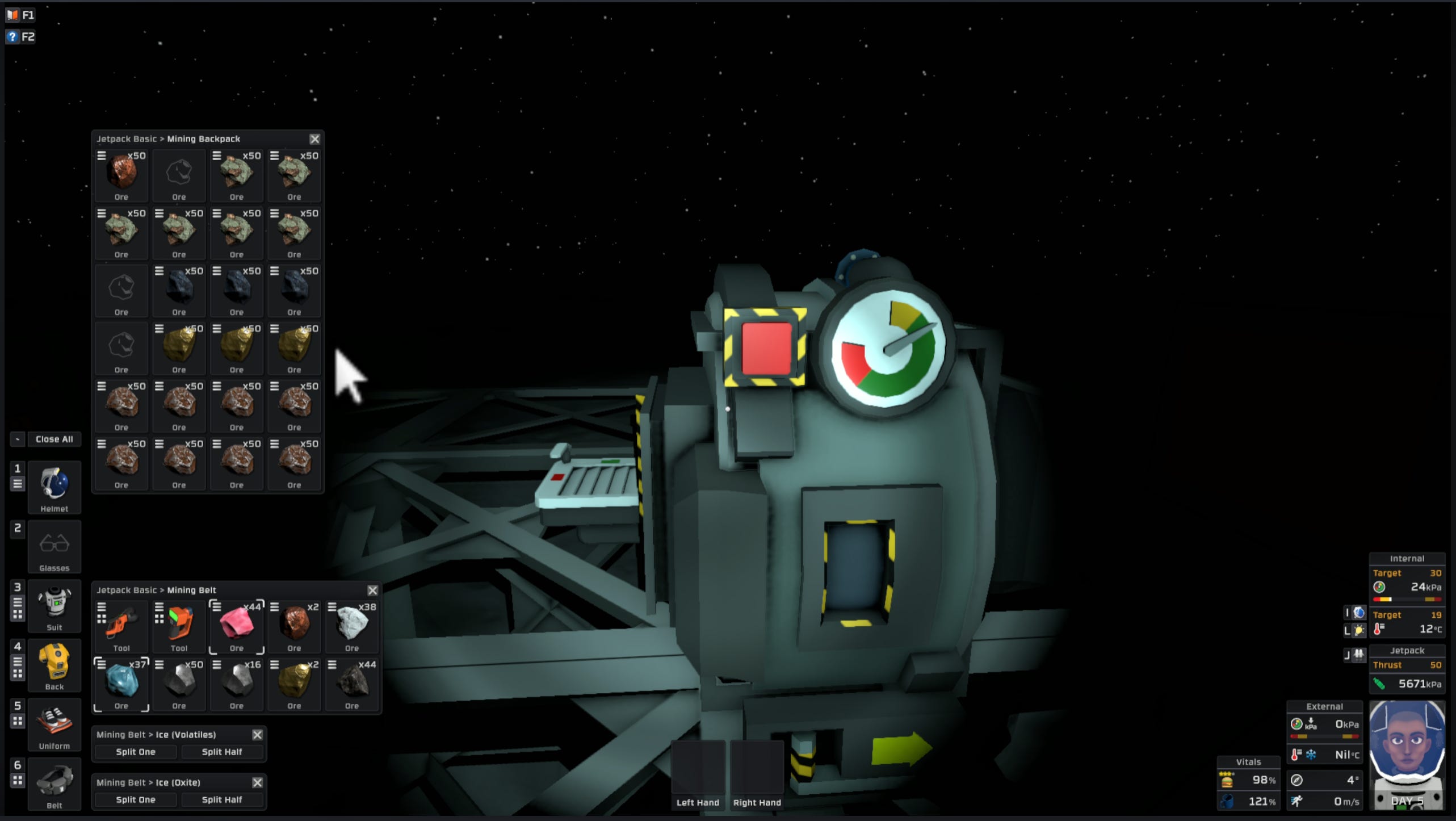
Mine resources needed to construct components. It is recommended to collect the following amounts for each fabricator (values are rounded up to the nearest stack for simplicity):
Raw
3 stacks coal
8 stacks iron
6 stacks copper
3 stacks gold
Autolathe
50g iron
50g copper
200g steel
Electronics Printer
50g iron
150g gold
250g copper
200g steel
Mining Tips:
Before leaving the base,
Top off Stationeer health and suit provisions
Turn on tracking beacon
A mining backpack increases ore storage capacity
Fill any remaining capacity with other ore types encountered along the way. Can be used to make more complex alloys and better equipment.
Cables
Fabricate cables and heavy cables. Build at least one stack of each type.
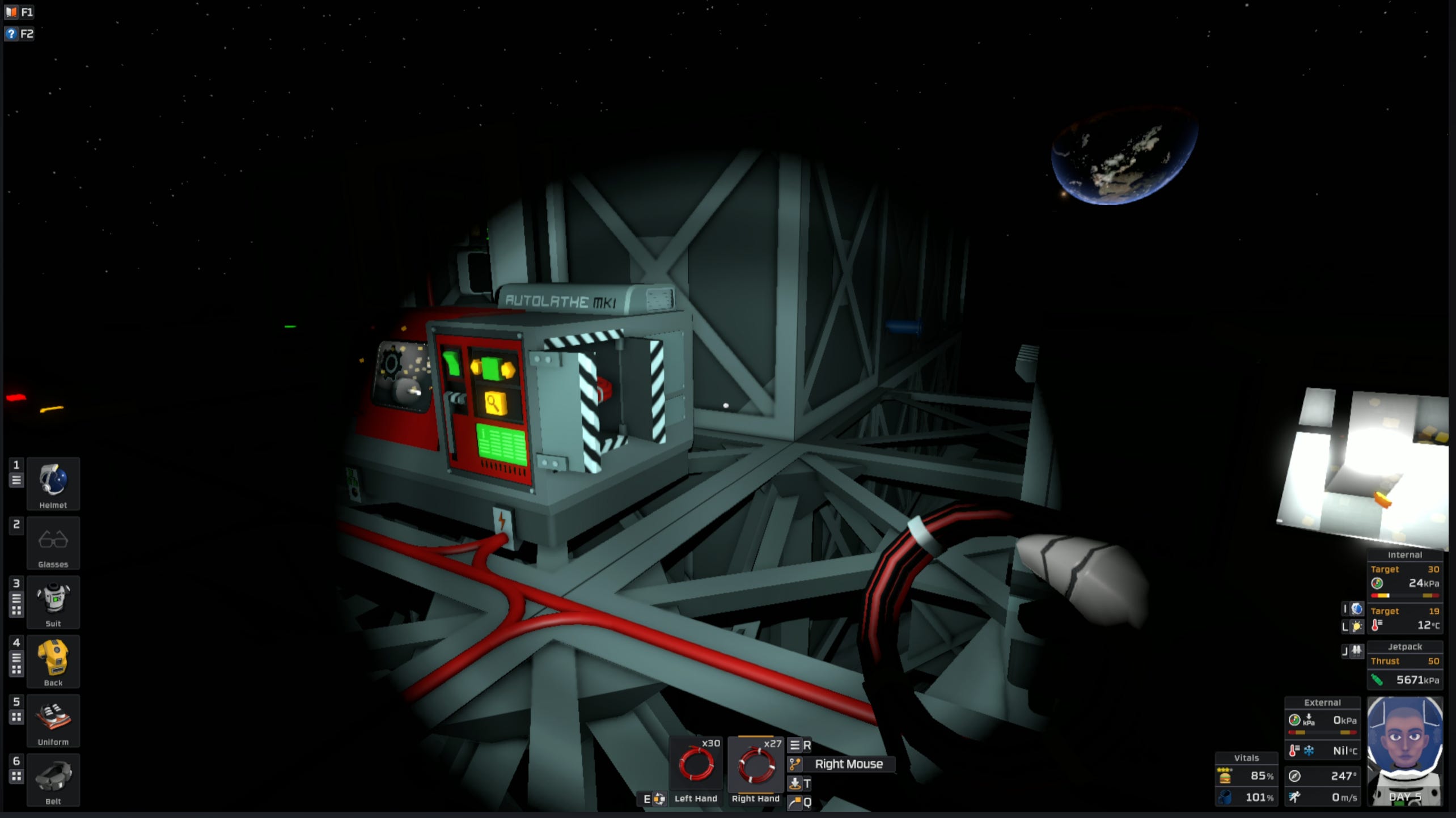
Replace cables used to route power from the solar panel and generator with heavy cable.
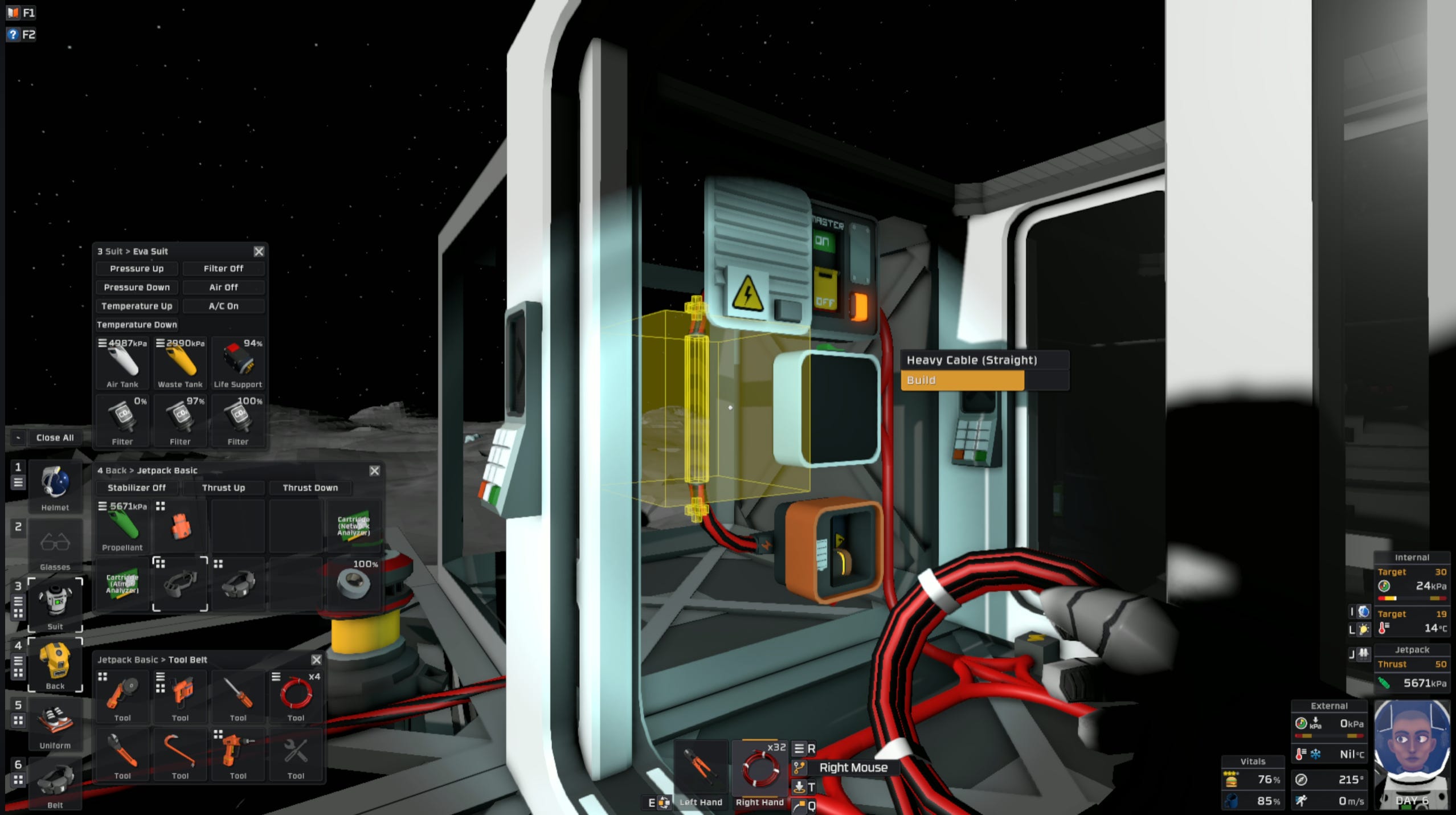
Station Battery
Begin fabrication of the station battery and construct the power platform.
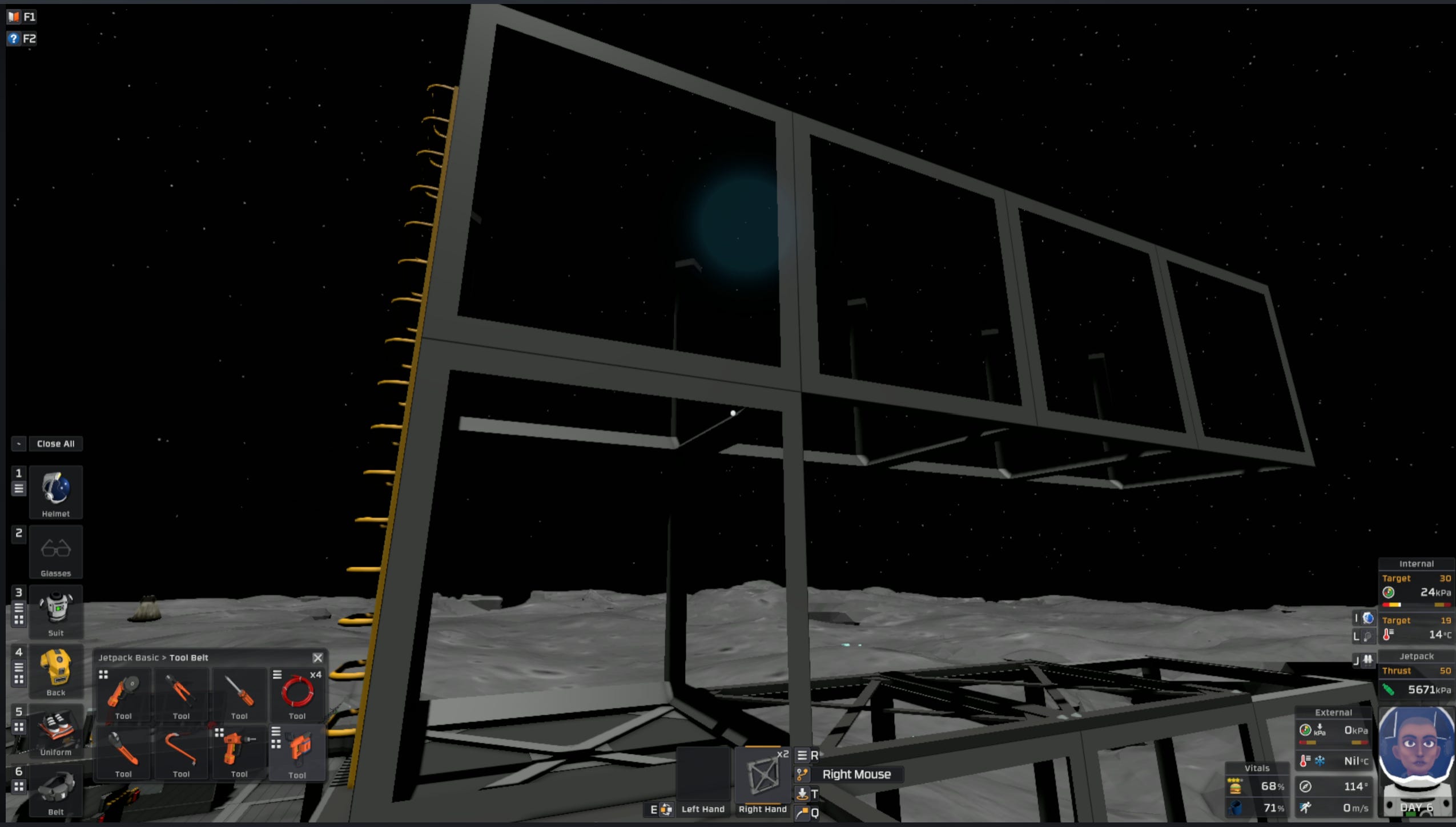
Install the station battery. Re-route the generator and charge the battery.
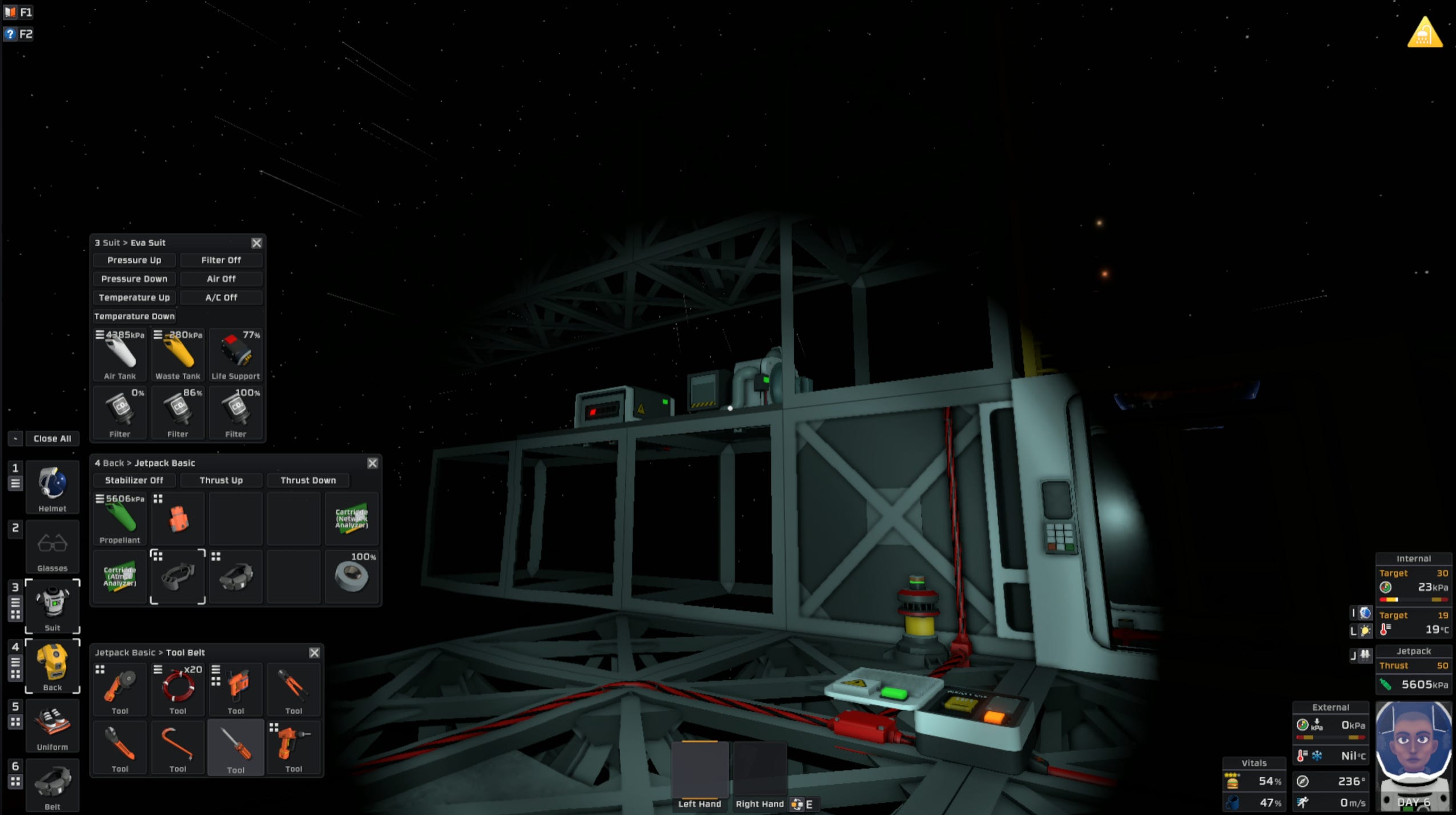
Use the electronics printer to construct remaining components: transformer, logic I/O kits, sensor, lights (including a portable light), cables, and heavy cables.
Solar Panels
Fabricate the 5 needed solar panels and attach the cabling needed to attach the solar panels to the power (Net-0, Heavy) and data (Solar, Standard) networks. Install Solar tracking components, first by replacing the fabrication APC with a transformer (Setting: 5kW). The APC will now be used to route power to the Solar network and will contain a small battery backup. The large battery can now be used to power the portable light.
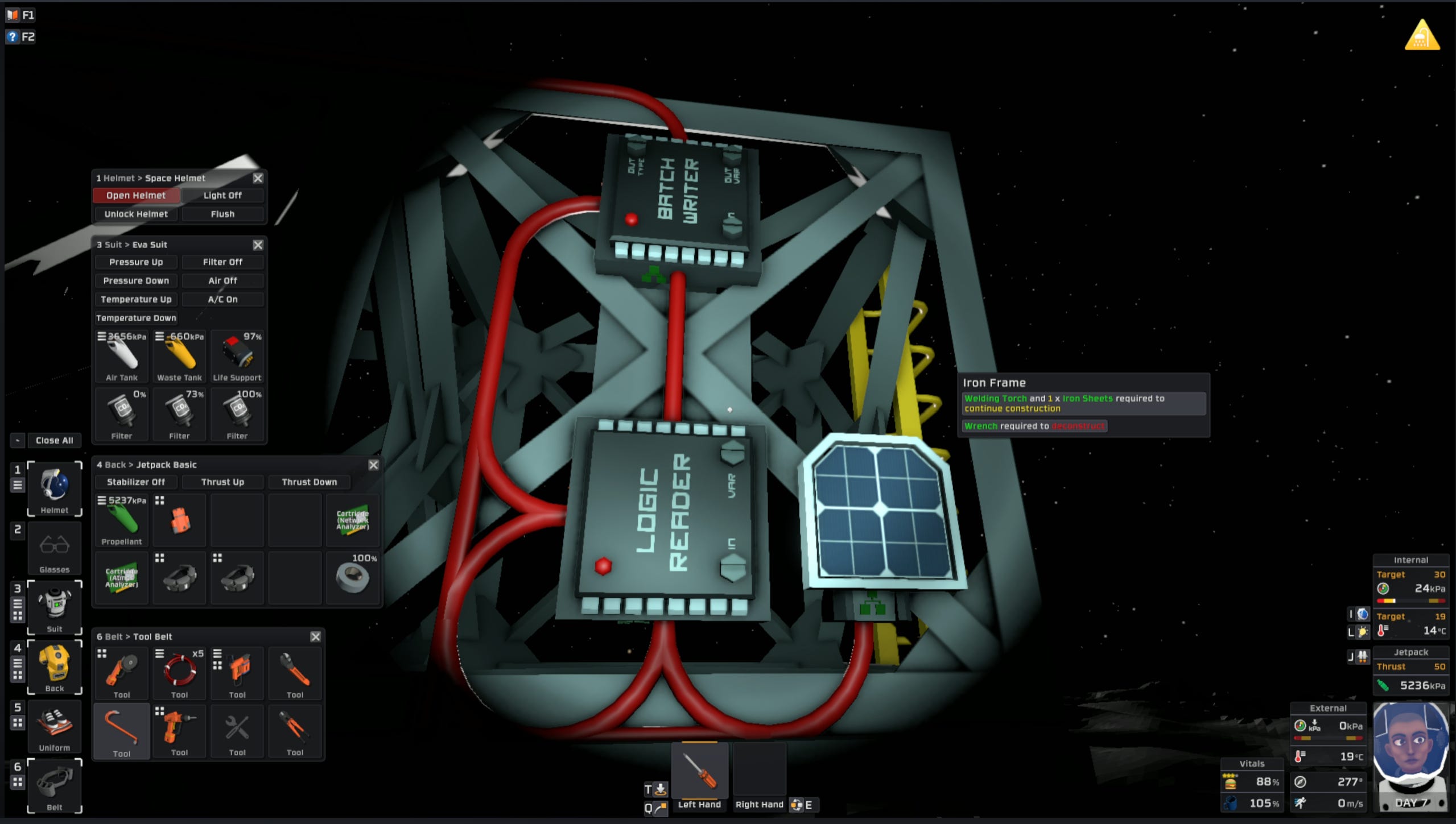
The logic reader reads from the daylight sensor vertical output and the batch writer writes to the solar panels vertical input.
Install the solar panels, rotating them horizontally to match the path of the sun.
Lighting
Attach two lights on the north and south exterior of the base and the third in the interior. Connect those lights to the general network, which is governed by the remaining transformer (Setting: 5kW).